
Buying Guide
Where should you install your wine fridge? Everything you need to know about the best locations.
Choosing the right location for your wine fridge: our tips for optimal wine preservation.
Kitchen, basement, garage or dining room, it can be difficult to know where to install your wine fridge. To ensure optimal wine preservation and aging conditions, it is important to avoid heat sources and direct sunlight. Vibrations and poorly ventilated spaces should also be avoided. Here are six key factors to consider when choosing the best location for your wine fridge.
Temperature around your wine fridge.
Finding the best location for your wine fridge starts with the temperature of the room in which it will be installed. Often overlooked, both the ambient temperature and the temperature of nearby elements play a key role in ensuring optimal wine preservation.
Sudden temperature fluctuations should be avoided wherever possible. Installing your wine fridge near an oven, radiator, fireplace or large sun-exposed window is strongly discouraged. These heat sources can affect the appliance’s performance and make it more difficult to maintain stable storage conditions. Conversely, excessively cold or poorly insulated environments can also be problematic. For example, an unheated garage or a damp utility room may not provide suitable conditions. Ideally, your wine fridge should be installed in a room with a stable temperature, protected from seasonal variations and excessive heat or cold.
The recommended ambient temperature range for optimal operation varies from one wine fridge to another. Before purchasing, it is therefore essential to review the technical specifications carefully. Does the appliance display the actual temperature inside the cabinet or only the set temperature? Is it capable of both cooling and heating to maintain ideal storage conditions?
Some wine fridges, such as those designed by EuroCave, are equipped with frost-protection systems, making installation possible in garages or other unheated spaces.
Before making your choice, consult the technical documentation for the selected model or seek advice from a sales consultant in-store or from customer service when purchasing online.
Keep your wine fridge away from household vibrations.
Vibrations are often overlooked, yet they are one of wine's silent enemies. Over time, they can interfere with the aging process and disturb the natural sedimentation of the wine. Choosing a location protected from vibrations, even minor ones, is therefore essential.
Avoid placing your wine fridge close to household appliances such as washing machines or conventional refrigerators. These appliances generate regular micro-vibrations that may be imperceptible but can affect wine storage in the long term. External sources of vibration should also be considered. Nearby railway lines or underground transport systems, for example, may compromise the stability of your bottles. Whenever possible, choose a quiet location away from mechanical activity and heavy traffic.
Installing a wine fridge and managing humidity levels.
Humidity plays a crucial role in preserving wine under optimal conditions. Air that is too dry can cause corks to shrink, allowing oxygen to enter the bottle and accelerate oxidation. Excessive humidity, on the other hand, may lead to mould growth and damage wine labels. Ideally, humidity levels should remain around 70%.
For this reason, it is advisable to choose a wine fridge equipped with a humidity display or, on the most advanced models, an automatic humidity regulation system, such as EuroCave’s Royale wine fridge. Some models also feature alerts that notify you of abnormal variations, allowing you to take action quickly and preserve your wines over the long term.
Does your wine fridge need to be installed in a well-lit area?
Does your kitchen or dining room feature large windows? Is your home filled with natural light? If so, special attention should be paid when choosing the location of your wine fridge.
Prolonged exposure to natural or artificial light can damage the wine and alter its aging potential. It is therefore best to install your wine fridge away from direct sunlight. To further protect your bottles, EuroCave has developed wine fridges with UV-protected glass doors.
Air circulation and wine fridge installation.
Adequate airflow is essential for the proper operation of a wine fridge. When installing your appliance, ensure sufficient space is left at the rear and sides to allow air to circulate freely around the ventilation system.
Restricted airflow can lead to overheating and affect temperature and humidity regulation. A wine fridge that is not specifically designed for built-in installation should never be enclosed within cabinetry or placed flush against a wall without ventilation.
For integrated installations, choose a built-in wine fridge or a wine fridge with front ventilation, specifically designed for this type of configuration.
A wine fridge: both practical and stylish.
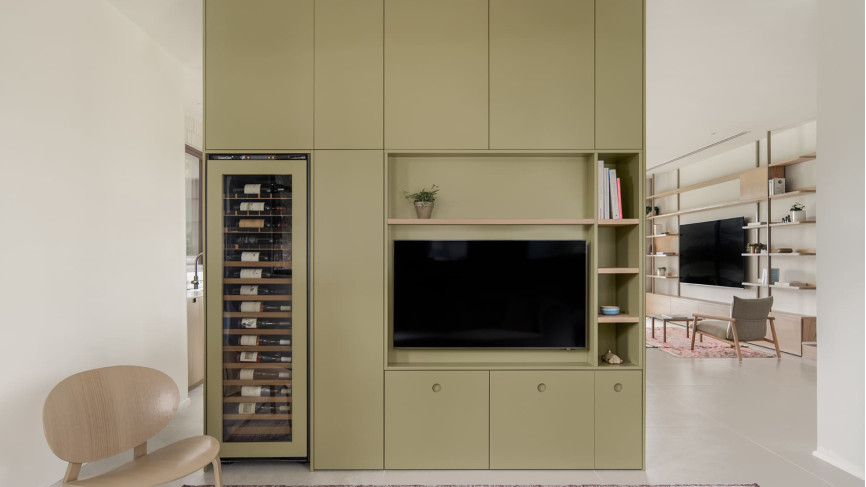
Today, a wine fridge is no longer something to hide away. It has become a design feature in its own right while continuing to provide optimal storage conditions for your wines.
Whether you have a compact space, an unused corner, a sloping ceiling or limited ceiling height, there is a wine fridge suited to your interior. Available in freestanding, compact or built-in designs, wine fridges can be integrated seamlessly into a kitchen, living room or bespoke piece of furniture.
Choose a wine fridge that complements both your interior design and your lifestyle.
Installing a wine fridge is about far more than simply finding available space.
It is about creating the ideal conditions for your wines to reveal their full potential. Temperature, humidity, light, vibrations and ventilation all play a vital role in ensuring optimal wine preservation and aging.
EuroCave wine fridges are designed to meet each of these requirements, helping you preserve your wines in the best possible conditions and enjoy every bottle at its finest.
6 wine fridge installation ideas.
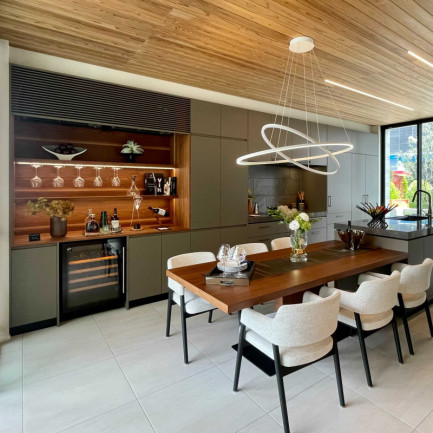
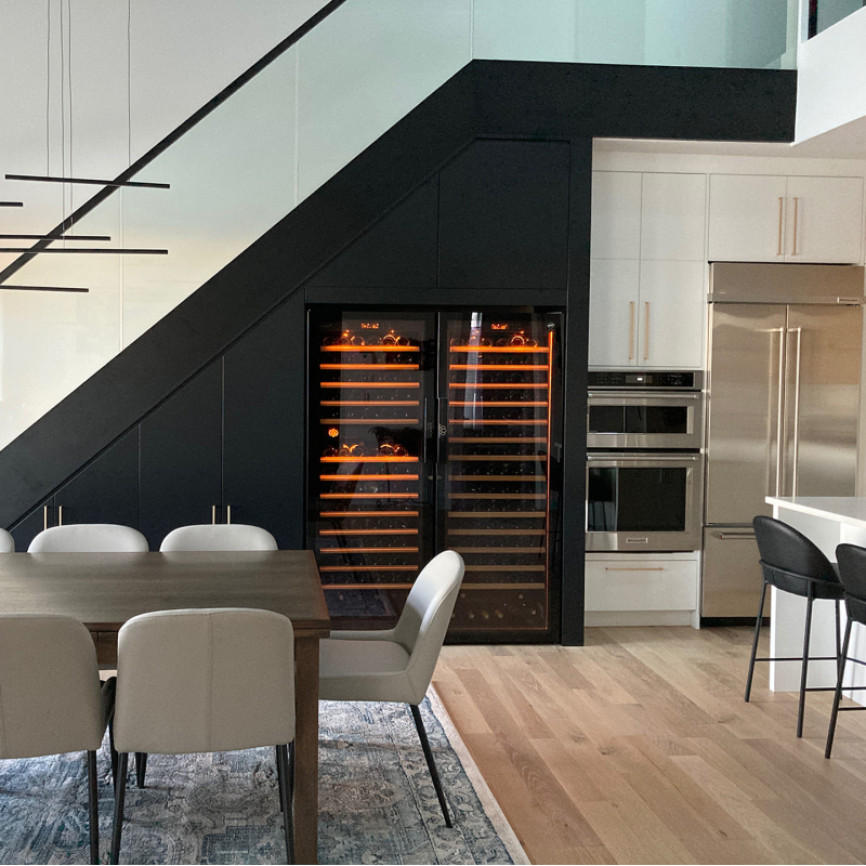
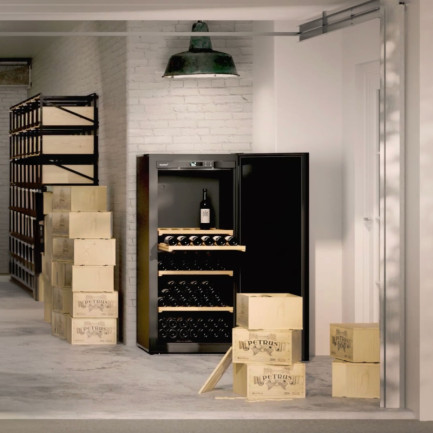
Once confined to cellars and basements, wine fridges have become a natural feature of modern living spaces. In a kitchen, living room, under the stairs or even in a garage, a wine fridge can be installed in many different locations, provided a few key principles are respected. Discover six real-life installation examples to inspire your own project and help you imagine a wine fridge in your home.



Need help?
Get in touch with our EuroCave experts and benefit from personalised guidance to help you choose the wine fridge best suited to your needs. Capacity, performance, intended use: our specialists provide clear, practical advice to help you make the right choice.
Understanding wine preservation.
EuroCave advice
The 6 wine preservation criteria explained.
Wine explained
Everything you need to know about wine aging.
EuroCave advice